Building a Stronger Defence for Nigeria’s Digital Finance: What the July Workshop Delivers

Nigeria’s digital finance sector is growing at a pace few anticipated. Cryptocurrency adoption is accelerating, virtual asset service providers are expanding, and financial institutions are deepening their digital asset exposure, all of which creates opportunity and, alongside it, a responsibility to build the compliance and security infrastructure that protects that growth.

Globally, the threat landscape facing digital finance institutions has never been more complex. State-sponsored cyber actors, sophisticated social engineering campaigns, insider threats, and increasingly creative money laundering schemes now target the operational gaps that fast-growing sectors inevitably develop. Nigerian institutions are not immune. In fact, their growth makes robust defence capabilities more urgent, not less.

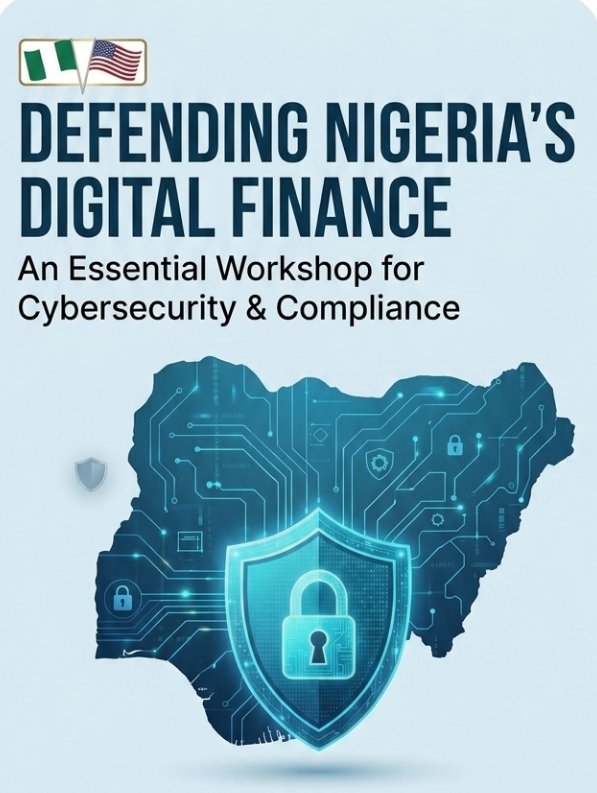
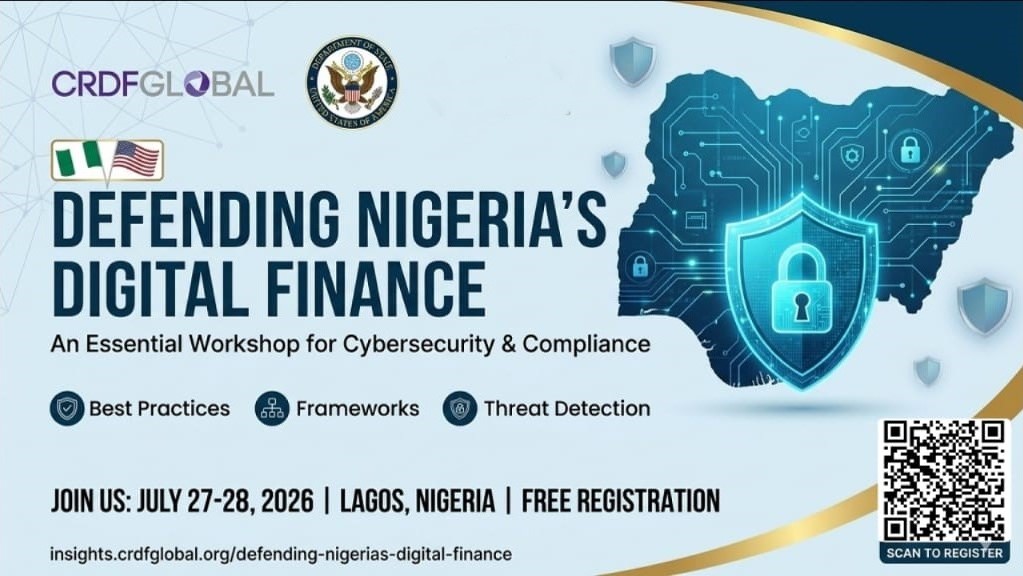
On July 27–28, 2026, CRDF Global, in partnership with the U.S. Department of State’s Office of Cooperative Threat Reduction, brings a free, two-day workshop to Lagos: “Defending Nigeria’s Digital Finance: Countering DPRK Cryptocurrency Threats.”
The workshop equips Nigerian financial professionals with the cybersecurity frameworks, compliance tools, and institutional capabilities they need to protect their organisations and strengthen Nigeria’s digital finance sector as a whole.

It is free to attend. Registration closes June 5, 2026.


Why This Workshop Matters for Nigeria

Nigeria’s position as one of Africa’s leading digital finance markets carries significant responsibility. Institutions operating in this space cryptocurrency exchanges, fintechs, payment service providers, and banks with digital asset exposure manage the financial integrity of a growing ecosystem that millions of Nigerians depend on.

Maintaining that integrity requires more than good intentions. It requires specific technical controls, well-designed compliance programmes, trained teams, and the institutional knowledge to respond effectively when incidents occur. Many Nigerian VASPs and financial institutions have made progress on these fronts. However, the threat environment evolves faster than most internal training and compliance programmes can track.

This workshop closes that gap. Rather than a generic cybersecurity overview, it delivers operationally specific frameworks built around the real attack patterns and compliance challenges that Nigerian digital finance institutions face drawn from CRDF Global’s work across more than 120 countries and the intelligence resources of the U.S. Department of State.

Furthermore, it does so at no cost to participants, making it one of the most accessible capacity-building opportunities available to Nigeria’s digital finance sector this year.


What the Workshop Covers

CRDF Global’s two-day programme covers the full spectrum of cybersecurity and compliance capability that digital finance institutions need:

  • Compliance Frameworks for Virtual Asset Service Providers Nigeria’s VASP sector operates under increasing regulatory obligations from the SEC, CBN, and FATF standards on virtual assets. Therefore, the workshop examines how to build compliance programmes that satisfy those obligations while simultaneously addressing the vulnerabilities that sophisticated threat actors exploit. Participants leave with a clearer understanding of where their current programmes are strong and where they need reinforcement.
  • Threat Awareness: Tactics, Techniques, and Procedures Effective defence starts with understanding how attacks actually work. Participants gain practical intelligence on the specific tactics, techniques, and procedures that advanced cyber actors deploy against crypto institutions, how they identify targets, gain initial access, move laterally through systems, and execute fund transfers. Understanding the adversary’s methodology is the foundation of any effective defence.
  • Cybersecurity Best Practices for Crypto Infrastructure Consequently, from exchange platform hardening to employee access controls, the workshop provides a practical security framework calibrated specifically for the Nigerian VASP environment. This is not generic cybersecurity advice; it is operationally specific guidance built around the attack patterns targeting this sector, delivered by practitioners with direct experience implementing these controls globally..
  • API and Cloud Security Modern crypto infrastructure is cloud-native and API-driven, and those interfaces represent a significant attack surface. The workshop examines the most common cloud and API vulnerabilities exploited in crypto-sector attacks and the controls that close them, with specific attention to the configurations most relevant to Nigerian market infrastructure.
  • Vulnerability Management In practice, identifying, prioritising, and remediating vulnerabilities before threat actors exploit them requires both technical process and organisational discipline. The session covers vulnerability management frameworks adapted for crypto institutions operating under resource constraints, a practical reality for many Nigerian VASPs and fintechs.
  • Insider Threat, Workforce Vetting, and North Korean IT Workers One of the most underappreciated risks in digital finance institutions is the insider threat, whether through deliberate action, compromised credentials, or employees manipulated through social engineering. A particularly documented dimension of this risk involves North Korean IT workers who infiltrate crypto firms by presenting themselves as legitimate remote contractors through professional hiring platforms, under false identities. Once granted system access, they conduct reconnaissance and facilitate financial crimes from inside the organisation. The workshop addresses this specific tactic alongside broader workforce vetting practices, access control design, and the behavioural indicators that security and compliance teams should monitor. For that reason, HR, procurement, and operations leaders are as much the target audience for this session as technical staff.
  • Social Engineering and Phishing Defence People remain the most exploited vulnerability in any security programme. Specifically, the session covers social engineering patterns, phishing, spear-phishing, and business email compromise as well as the insider threat indicators that compliance and security teams should actively monitor. Practical, implementable awareness and response protocols are included.
  • Incident Response and Law Enforcement Collaboration When a security incident occurs, the speed and quality of the response ultimately determines how much damage the institution absorbs. To that end, the workshop covers incident response protocols and critically how to engage Nigerian and international law enforcement and regulatory bodies effectively when a breach occurs. Knowing who to call and what to say in the first hours of an incident is a capability most institutions only develop after experiencing one. This session builds it in advance.
  • Information Sharing and Threat Intelligence Furthermore, the digital finance sector’s resilience improves significantly when institutions share threat intelligence consistently. The session covers the frameworks and channels through which Nigerian VASPs and financial institutions can participate in threat intelligence networks contributing to sector-wide defence rather than each institution managing its exposure in isolation.

Who Should Attend

This workshop targets the professionals responsible for compliance, security, and risk management in Nigeria’s digital finance sector:

  • Compliance officers and AML professionals at cryptocurrency exchanges, fintechs, and banks with digital asset exposure
  • Cybersecurity professionals responsible for securing crypto and payment infrastructure
  • Risk officers assessing digital asset exposure at commercial banks and payment providers
  • Technology leaders managing wallet, exchange, and payment platform infrastructure
  • Operations and fraud professionals at virtual asset service providers
  • HR and procurement leaders at institutions with significant digital asset operations

Importantly, this workshop is not exclusively for technical staff. The compliance, threat awareness, and workforce security sessions are designed for professionals across risk, compliance, legal, operations, and leadership functions. If your role touches the security, compliance, or integrity of a Nigerian digital finance institution, this programme has direct value for you.


About the Organisers

CRDF Global is an independent nonprofit organisation that advances international security and prosperity across more than 120 countries. With more than 30 years of experience in technical training, security cooperation, and threat reduction programmes, CRDF Global therefore operates at the intersection of geopolitical threat intelligence and practical institutional capacity building. Its work in financial sector security spans multiple continents, and its Lagos workshop draws on that global experience to deliver content calibrated for the Nigerian ecosystem.

The U.S. Department of State’s Office of Cooperative Threat Reduction works globally to reduce threats to international security and stability, including the financial flows that can undermine them. Its partnership with CRDF Global on this workshop reflects a shared commitment to building the institutional capacity that protects the integrity of digital finance markets in emerging economies.

Together, these organisations bring global intelligence resources and on-the-ground capacity-building expertise to a programme specifically designed for Nigeria’s digital finance sector.


This Workshop Is Free

There is no registration fee. In addition, lunch, coffee, and refreshments are provided across both days.

Spaces are limited and allocated on a first-come, first-accepted basis. CRDF Global will confirm participation via email after receipt of registration.

Registration deadline: June 5, 2026

This deadline is not administrative. CRDF Global uses the registration window to confirm participant profiles and ensure the programme reaches the professionals it is designed for. In other words, missing the deadline means losing the opportunity entirely, regardless of how relevant the content is to your institution.


Register Now

Dates: July 27–28, 2026 Venue: Lagos, Nigeria (TBD — confirmed details sent to registered participants)

Register by June 5: https://insights.crdfglobal.org/defending-nigerias-digital-finance

Questions: gkelly@crdfglobal.org


For More Enquiries

CBC Blockchain Services 📧 contact@cbcblockchain.com 📧 obinna@cbcblockchain.com


The Opportunity Ahead

Nigeria’s digital finance sector has the scale, the talent, and the momentum to define what responsible, resilient digital finance looks like across Africa. Realising that potential requires institutions that not only move fast but build strong with the cybersecurity controls, compliance programmes, and institutional knowledge to protect their customers, their partners, and the integrity of the ecosystem they are building.

As a result, the critical question facing every VASP, exchange, fintech, and bank with digital asset exposure is whether their security and compliance capabilities are growing at the same rate as their business.

Fortunately, this workshop provides two days of targeted, expert-led capacity building at no cost specifically designed to support that growth. The knowledge, frameworks, and peer networks participants gain will directly strengthen how their institutions manage security and compliance in the years ahead.

Register by June 5. The room is limited. The opportunity is not.

What do you think?
Leave a Reply

Your email address will not be published. Required fields are marked *