
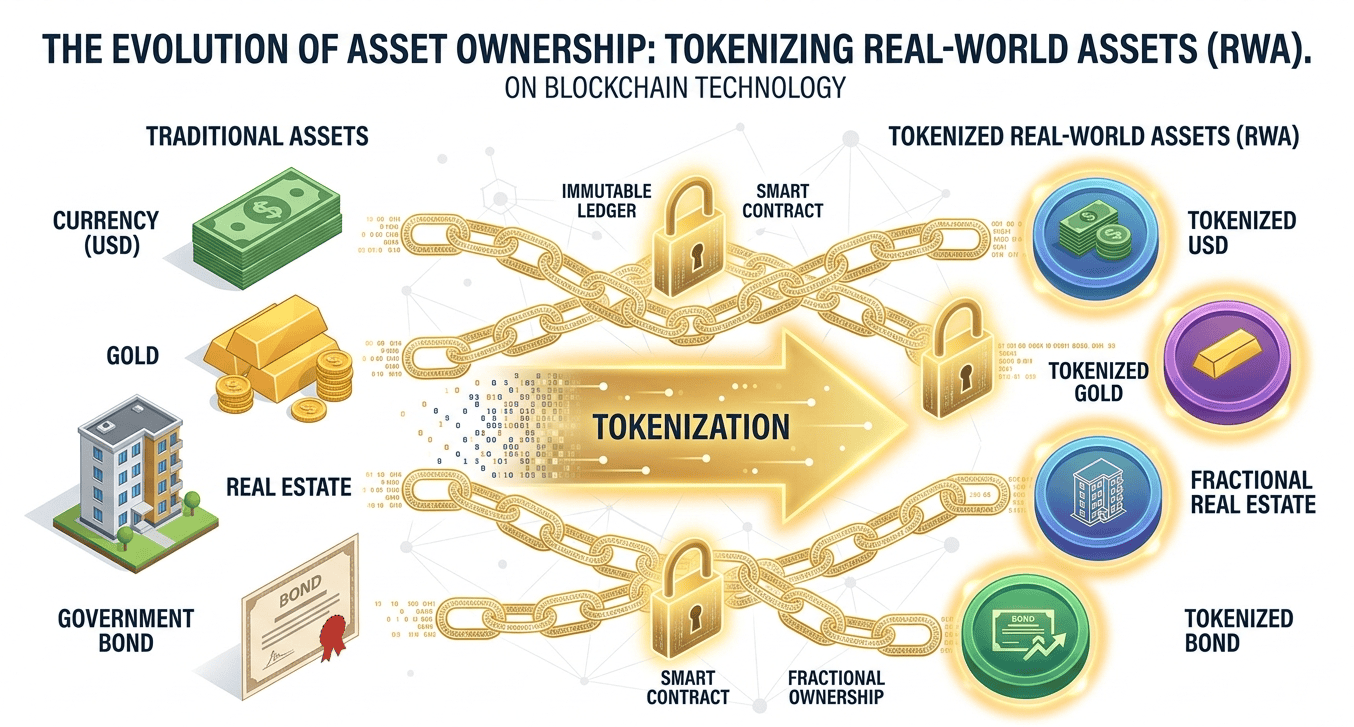
While Bitcoin and altcoins bleed in “extreme fear”, one corner of crypto is quietly printing new all-time highs.
The tokenized real-world assets (RWA) market just hit $27.65 billion in April 2026, a solid 4.07% gain in the past 30 days alone, according to RWA.xyz data. That’s despite the broader crypto downturn. US Treasuries alone make up nearly half the total at ~$12.78–13.44 billion.
This isn’t hype. It’s institutions quietly moving trillions in traditional finance onto the blockchain — one tokenized Treasury at a time. Here’s why RWAs are becoming the most resilient narrative in crypto right now.
Why RWAs Are Defying the Crypto Downturn
Traditional markets are hungry for yield and efficiency. Tokenized RWAs deliver both:
- Real yield in a high-rate world: Short-term US Treasuries are yielding ~4–5% APY with near-zero risk.
- 24/7 global access: No bank holidays, no T+2 settlement — instant, borderless trading and collateral use in DeFi.
- Composability: A tokenized Treasury can be used as collateral for loans, derivatives, or yield farming without leaving the chain.
What Are Tokenized RWAs and How Do They Actually Work?
Tokenization converts ownership of real-world assets (bonds, real estate, private credit, commodities, equities) into blockchain tokens. Each token represents a fractional or full claim, backed 1:1 by the underlying asset.
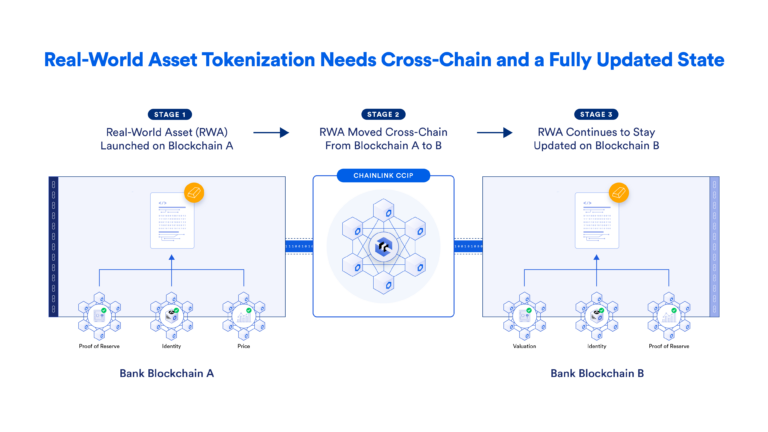
The process is straightforward but powerful:
- Off-chain assets (e.g., US Treasury bills) are custodied by a regulated entity.
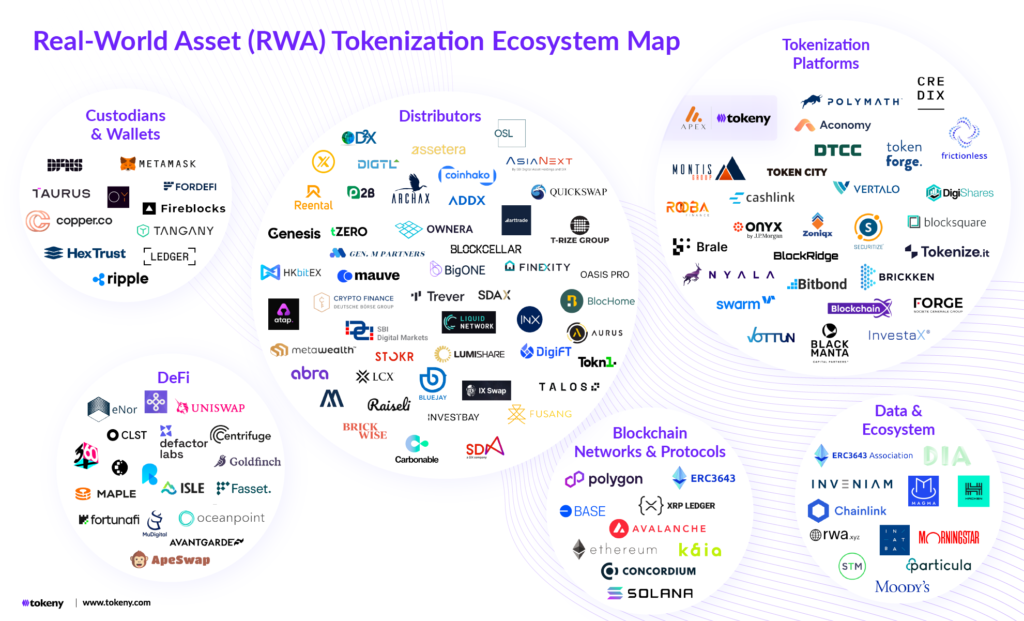
- Issuer (BlackRock, Ondo, Franklin Templeton) creates a smart contract token on-chain.
- Oracles (Chainlink, etc.) feed real-time pricing, NAV, and compliance data.
- Investors buy, trade, or use the token in DeFi protocols.
US Treasuries Lead the Charge
Tokenized US Treasuries are the undisputed king of RWAs right now:
- Total value: $12.78–13.44 billion (~48% of entire RWA market).
- Top products:
- BlackRock BUIDL → ~$2.37 billion (dominant leader, daily dividends, multi-chain).
- Ondo USDY → approaching $1.3 billion.
- Franklin Templeton BENJI → ~$921 million.
- Circle USYC and others rounding out the field.
Other fast-growing categories include private credit (~$19B+ in some reports), tokenized gold/commodities, and early real estate pilots.
The Institutional Power Players Driving 2026 Growth
- BlackRock: With $14+ trillion AUM, their BUIDL fund proved tokenized funds can scale to billions instantly.
- Ondo Finance: Bringing Treasury exposure + launching its own L1 for institutional RWAs.
- Franklin Templeton, VanEck, Hamilton Lane: Traditional giants now issuing on Ethereum, Solana, Polygon, and BNB Chain.
Chains are competing hard: Ethereum still leads overall, but Solana and BNB Chain are surging thanks to speed and lower costs.
Challenges & The Road to Trillions
RWAs aren’t perfect yet. Liquidity is still lower than traditional markets, some products have high minimums, and cross-chain fragmentation remains an issue. Regulatory clarity (especially in the US) is improving but not complete.
Still, analysts project $16–30 trillion in tokenized assets by 2030. The infrastructure is already here, the capital is flowing.
What This Means for Crypto Investors and the Broader Market
- Stable on-chain yield: Finally, a real benchmark rate for DeFi.
- Bridge to TradFi: Institutions are onboarding at scale — this is how crypto goes mainstream.
- Resilience: RWAs grew while the rest of the market bled. That’s real utility.
The $27.65 billion tokenized RWA milestone in April 2026 isn’t just another number — it’s proof that the biggest financial revolution since the internet is already underway. While crypto speculates, institutions tokenize.
Download Ebook: The Complete Tokenization Process
The quiet accumulation phase is happening right now. The question isn’t if RWAs will reach trillions — it’s which chains and protocols will capture the lion’s share.What’s your take — are you allocating to tokenized Treasuries yet, or waiting for the next wave (real estate, equities)? Drop your thoughts below.