The Scalability Problem Has a New Answer, Several of Them
Blockchain technology promised to transform global finance. However, for years, a fundamental challenge held it back: scalability. Early networks like Ethereum could process only 15 to 30 transactions per second (TPS), a fraction of Visa’s 24,000 TPS. Consequently, fees spiked, transactions stalled, and developers started seeking alternatives.
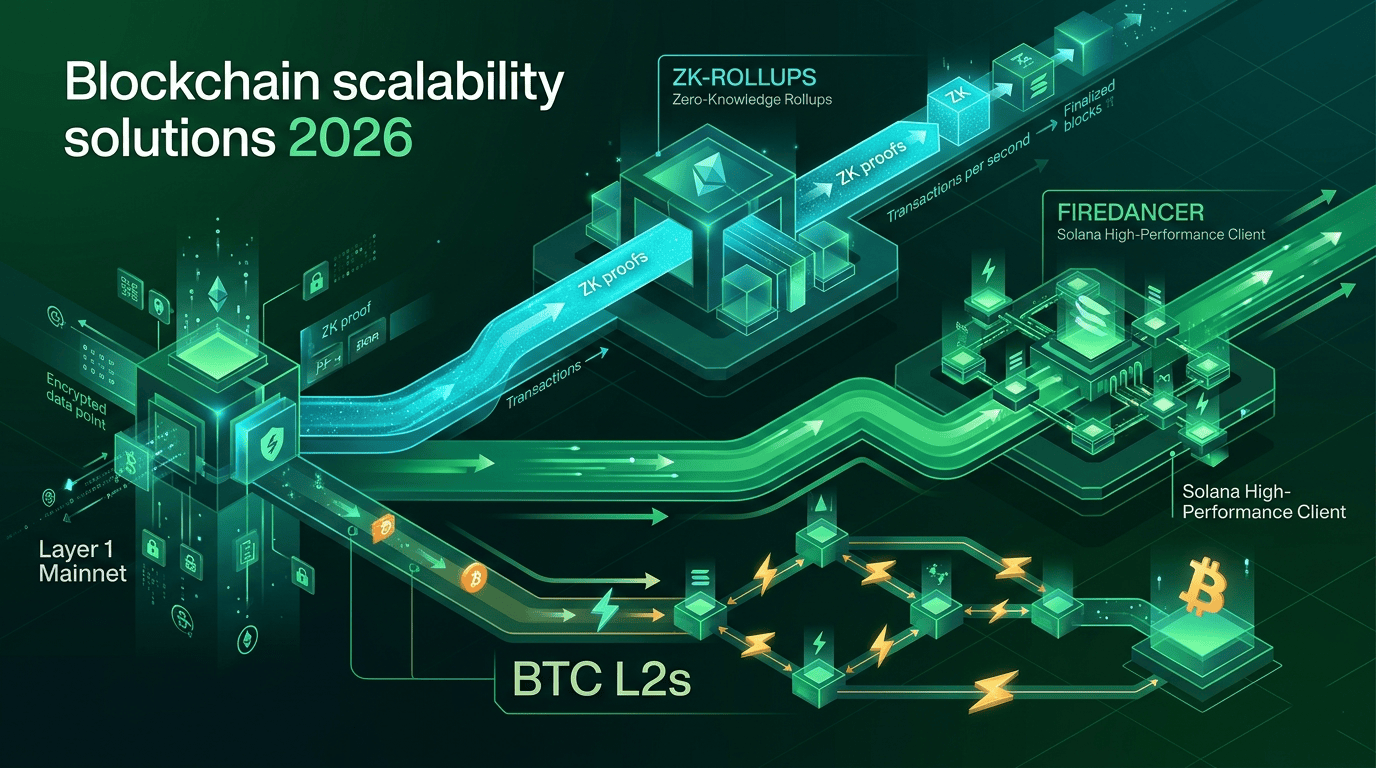
Today, that story is changing fast. In 2026, a new wave of scaling solutions — including ZK-rollups, optimistic rollups, Firedancer on Solana, and Bitcoin Layer 2 networks is pushing blockchain throughput into the millions of TPS. As a result, enterprise adoption is accelerating, and the infrastructure layer of Web3 is maturing rapidly.
This deep dive from CBC Blockchain Services breaks down what each solution does, why it matters, and how businesses should be thinking about the scalability landscape heading into the next cycle.
1. ZK-Proofs: Validity Without Disclosure
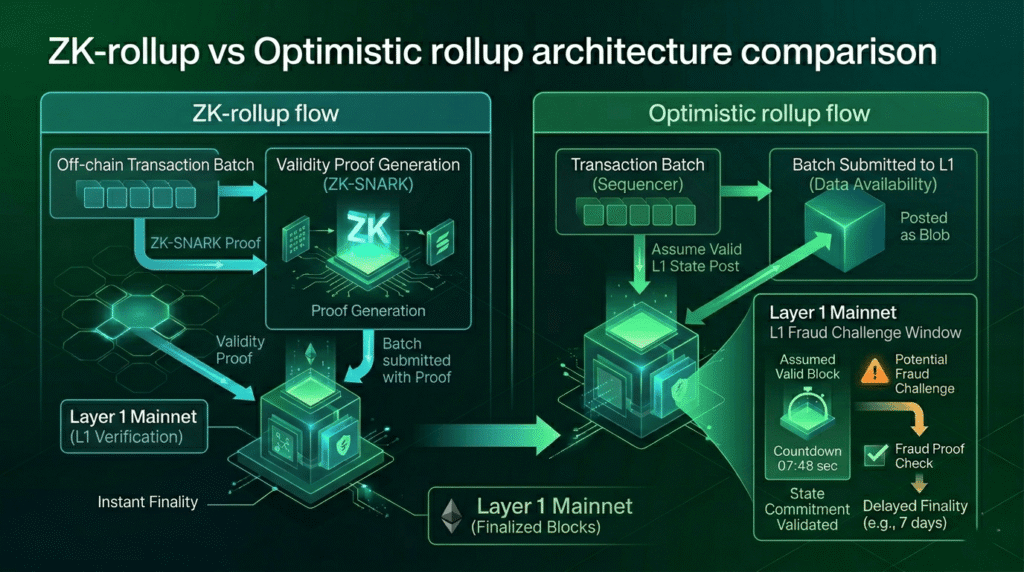
Zero-knowledge proofs (ZK-proofs) are one of the most significant cryptographic advances in blockchain history. In short, they allow one party to prove the validity of a computation to another party — without revealing the underlying data. Therefore, ZK-proofs solve two critical problems simultaneously: scalability and privacy.
How ZK-Proofs Work
Leading ZK-Rollup Projects to Watch
- zkSync Era — Full EVM compatibility with native account abstraction; processing millions of transactions monthly
- StarkNet — Uses zk-STARKs; strong developer ecosystem with Cairo smart contract language
- Polygon zkEVM — Polygon’s ZK solution with bytecode-level EVM compatibility
- Linea (ConsenSys) — Enterprise-focused ZK-rollup with deep MetaMask integration
💡 CBC Insight
ZK-rollups represent the long-term endgame for Ethereum scaling. Enterprise clients prioritizing compliance and privacy will find ZK infrastructure especially compelling, given its built-in data-minimization properties
2. Optimistic Rollups: Battle-Tested and EVM-Ready
While ZK-rollups generate cryptographic validity proofs, optimistic rollups take a different approach: they assume transactions are valid by default and post them to the base layer without proof. However, they include a fraud-proof window, typically seven days during which validators can challenge invalid transactions. Although the withdrawal delay is a limitation, optimistic rollups offer a critical advantage: near-perfect EVM compatibility. Consequently, developers can deploy existing Ethereum smart contracts on optimistic rollup chains with minimal modifications. This is precisely why Arbitrum and Optimism (OP Stack) have emerged as the dominant Layer 2 ecosystems in terms of total value locked (TVL) and developer activity.
Key Optimistic Rollup Networks
- Arbitrum One & Arbitrum Nova — The TVL leader in L2; Nova is optimized for gaming and social applications with ultra-low fees
- Base (Coinbase) — Built on the OP Stack, growing rapidly thanks to Coinbase’s distribution advantage and regulatory clarity focus
- Optimism Mainnet — Home of the Superchain vision; OP Stack is now powering a growing network of interoperable rollups
- Blast — High-yield L2 with native ETH and stablecoin yields, attracting retail DeFi users
3. Firedancer: Solana’s Million-TPS Validator Engine
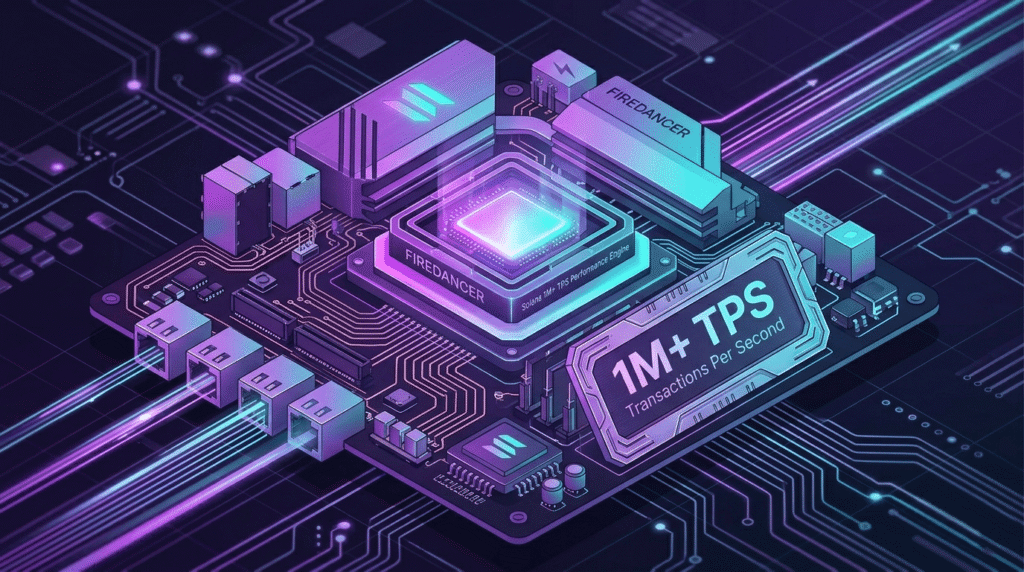
Existing Solana clients (Agave, formerly Solana Labs clients) are already fast, processing thousands of TPS in production. Firedancer, however, is built from scratch in C and C++ with a focus on extreme throughput and resilience. In benchmarks, Firedancer has demonstrated capacity exceeding 1,000,000 TPS a figure that, if realized in production, would make Solana faster than most traditional payment networks.
Why Firedancer Matters for Enterprise
- Client diversity: A second independent validator client reduces single-point-of-failure risk, a critical requirement for institutional infrastructure
- Latency improvements: Sub-400ms finality makes Solana competitive with traditional financial systems for real-time settlement
- Fee stability: Higher throughput means lower fee pressure essential for high-frequency applications like DePIN, payments, and on-chain gaming
- Network resilience: Firedancer’s architecture is designed to keep the network running even during extreme congestion events that previously caused outages
Furthermore, Firedancer’s phased deployment beginning with Frankendancer (a hybrid client) and moving toward full Firedancer demonstrates the maturity of Solana’s engineering roadmap. Therefore, enterprise clients evaluating Solana for high-throughput workloads should factor Firedancer’s timeline into their infrastructure planning.
💡 CBC Insight
Firedancer positions Solana as a credible settlement layer for institutional-grade applications. For CBC clients in payments, DePIN, or trading infrastructure, Solana + Firedancer is increasingly a first-tier consideration alongside Ethereum L2s.
4. Bitcoin Layer 2s: Smart Contracts Come to BTC
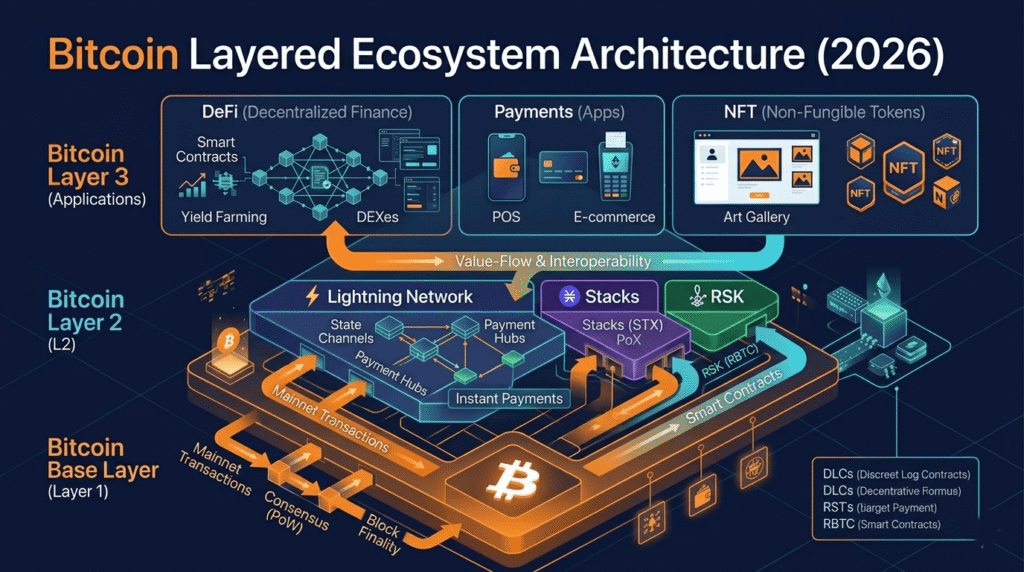
For years, Bitcoin was considered too rigid for scaling innovation. Its deliberate conservatism prioritizing security over programmability meant that Layer 2 development lagged far behind Ethereum. However, by 2026, Bitcoin’s Layer 2 ecosystem has matured significantly, bringing both payment channels and smart contract capabilities to the world’s most trusted blockchain.
Lightning Network: Bitcoin’s Payment Highway
Consequently, Lightning is ideal for micropayments, remittances, and high-frequency BTC transactions. With over 60,000 active nodes and growing merchant adoption across Latin America and Africa, Lightning is proving Bitcoin’s viability as an everyday payment rail.
Stacks: Smart Contracts Secured by Bitcoin
Other Notable BTC L2 Approaches
- Rootstock (RSK) — EVM-compatible Bitcoin sidechain with merge-mining security; established DeFi ecosystem
- BOB (Build on Bitcoin) — Hybrid L2 combining Bitcoin security with EVM programmability; growing developer activity
- Babylon Protocol — Enables Bitcoin staking to secure other PoS chains; unlocks Bitcoin as collateral across ecosystems
- BitVM — Experimental framework enabling complex computations verified on Bitcoin; opens door to trustless Bitcoin bridges
💡 CBC Insight
Bitcoin L2s are no longer an experiment they are a maturing ecosystem. For enterprises with a Bitcoin-first mandate or treasury Bitcoin holdings, using Lightning for payments and Stacks for DeFi exposure provides the best risk-adjusted on-ramp into Bitcoin-native infrastructure.
Scalability Solutions at a Glance
The table below compares the major scalability solutions across throughput, finality, and use case fit. Note that TPS figures reflect theoretical or benchmark peaks; production figures depend on network conditions.
| Solution | Type | TPS Capacity | Finality | Best For |
| Ethereum L1 | Base Layer | ~15-30 | ~12 min | Settlement, Security |
| Optimistic Rollups | Optimistic L2 | ~2,000-4,000 | ~7 days* | EVM dApps, DeFi |
| ZK-Rollups | Validity-Proof L2 | ~2,000-10,000 | Minutes | Payments, DEXs |
| Firedancer (SOL) | Validator Client | ~1,000,000+ | ~400ms | High-freq, Gaming |
| Lightning Network | BTC Payment Channel | ~1M+ | Near-instant | BTC Micropayments |
| Stacks (BTC L2) | BTC Smart Contract L2 | ~5,000 | ~10 min | BTC DeFi, NFTs |
Optimistic rollup withdrawals require a 7-day challenge window; fast bridges exist to circumvent this for users.
What Should Enterprise Builders Do Now?
Given the breadth of available scaling solutions, selecting the right infrastructure stack requires aligning technical requirements with strategic goals. Therefore, CBC recommends the following decision framework:
- If EVM compatibility is non-negotiable → Optimistic rollups (Arbitrum, Base, OP Mainnet) offer the smoothest migration path from Ethereum mainnet
- If privacy and regulatory compliance are priorities → ZK-rollups (zkSync, StarkNet, Polygon zkEVM) provide built-in data-minimization and verifiable computation
- If you need extreme throughput for high-frequency applications → Solana + Firedancer delivers unmatched raw performance for payments, gaming, and real-time settlement
- If your treasury or user base is Bitcoin-native → Lightning Network for payments; Stacks or RSK for DeFi and smart contract functionality
- If interoperability is a core requirement → Monitor the Superchain ecosystem (OP Stack chains) and cross-chain bridging protocols like LayerZero and Wormhole
Key Takeaways for Decision-Makers
| Technology | Bottom Line |
| ZK-Rollups | Best for privacy + speed; the future of Ethereum scaling |
| Optimistic Rollups | Battle-tested; ideal for EVM-compatible DeFi today |
| Firedancer | Solana’s path to 1M+ TPS — a validator revolution |
| Lightning Network | BTC micropayments at global scale — already live |
| Stacks + Others | Bringing smart contracts to Bitcoin without forking it |
The Scaling Race Is Won – The Application Race Begins
The blockchain scalability trilemma the tension between security, decentralization, and throughput has not been fully solved. Nevertheless, the industry has made extraordinary progress. ZK-rollups and optimistic rollups are scaling Ethereum to millions of users. Firedancer is pushing Solana toward performance that rivals traditional financial infrastructure. And Bitcoin’s Layer 2 ecosystem is finally delivering programmability and speed without compromising the base layer’s security.
As a result, the conversation in 2026 has shifted. The question is no longer “can blockchains scale?” it is “which scaling solution best fits my application?” Businesses that understand this distinction — and make infrastructure decisions accordingly — will build the most resilient, competitive, and future-proof blockchain applications.
At CBC Blockchain Services, we work with enterprise clients across 15 countries to navigate exactly these decisions. Whether you are evaluating Layer 2 infrastructure, scoping a blockchain implementation, or building a Web3 product strategy, our team brings the technical depth and industry context to help you move confidently.
| Ready to Build on the Right Infrastructure? Talk to a CBC blockchain infrastructure specialist — and make your next build decision with confidence. → Book a Free Strategy Call | cbcblockchain.com/consult |